Research
Joining the powers of chemistry and physics to understand diseases. The Gloeggler Lab pursues a unique interdisciplinary approach developing methods and molecular probes on the mission to provide insights about diseases before they affect human health.
Our main focus is to explore the following two fields of research:
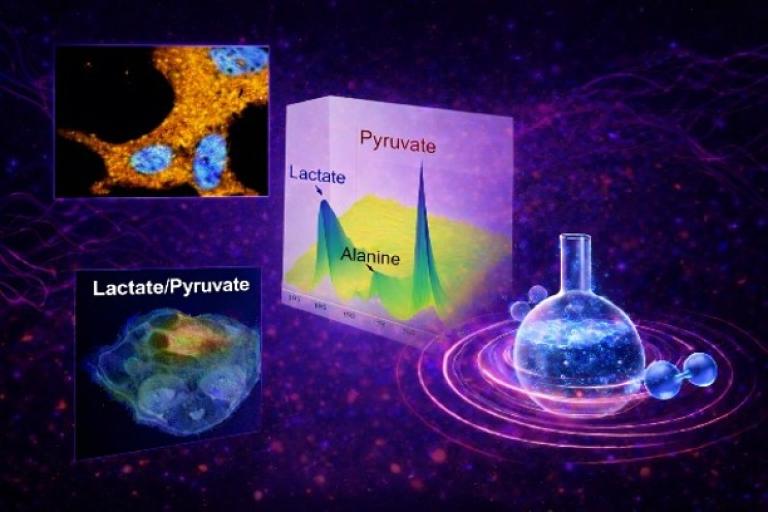
Quantum-enhanced biophysics and biochemistry in real-time
We are developing new approaches and molecules that enable us to monitor and understand diseases early by boosting magnetic resonance imaging (MRI) signals using quantum effects. Boosted MRI signals enable us to, e.g. investigate diseased tissue in real-time with an unprecedented readout about the effect of treatments or new drug candidates.
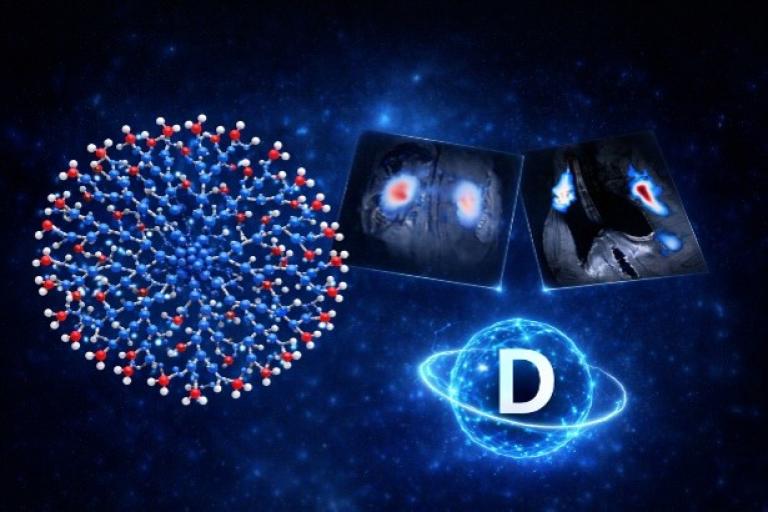
Stable isotope chemistry to image and cure
The heavy isotope of hydrogen – deuterium – offers new opportunities in designing molecular probes for biomedical imaging as well as to develop new therapeutics. To this end we are researching new molecules that enable us to monitor and cure diseases at an early stage which includes pursuing a deuterium-based nanotheranostics approach.
Meet the Principle Investigator
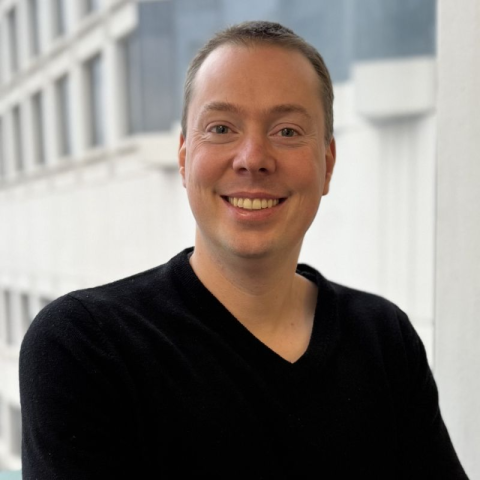
Stefan Gloeggler, Ph.D.
Professor, Biomedical Engineering
Head of the Advanced Integrative Molecular Probe Initiative AIMP | UT Southwestern, Dallas, Texas
Email
Dr. Stefan Gloeggler earned his Ph.D. from RWTH Aachen University in Germany and started his independent research group in 2017 at the Max Planck Institute for Multidisciplinary Sciences in Goettingen, Germany. In 2024, he was appointed as Full Professor at UT Southwestern in Dallas. His research focusses on developing molecular probes using isotopic labels and quantum-enhancing/hyperpolarizing magnetic resonance signals to study catalytic and biological systems. For his research, Stefan Gloeggler has been recognized with several awards including the Rising Star Award of the Cancer Prevention Research Institute of Texas, an ERC Starting Grant and the Felix Bloch lecture of the German Chemical Society (GDCh). At UTSW, Dr. Gloeggler is heading the Advanced Integrative Molecular Probe Collaboration which bundles basic and applied sciences with clinical expertise to develop next generation imaging agents to monitor, understand and cure diseases at an early stage.
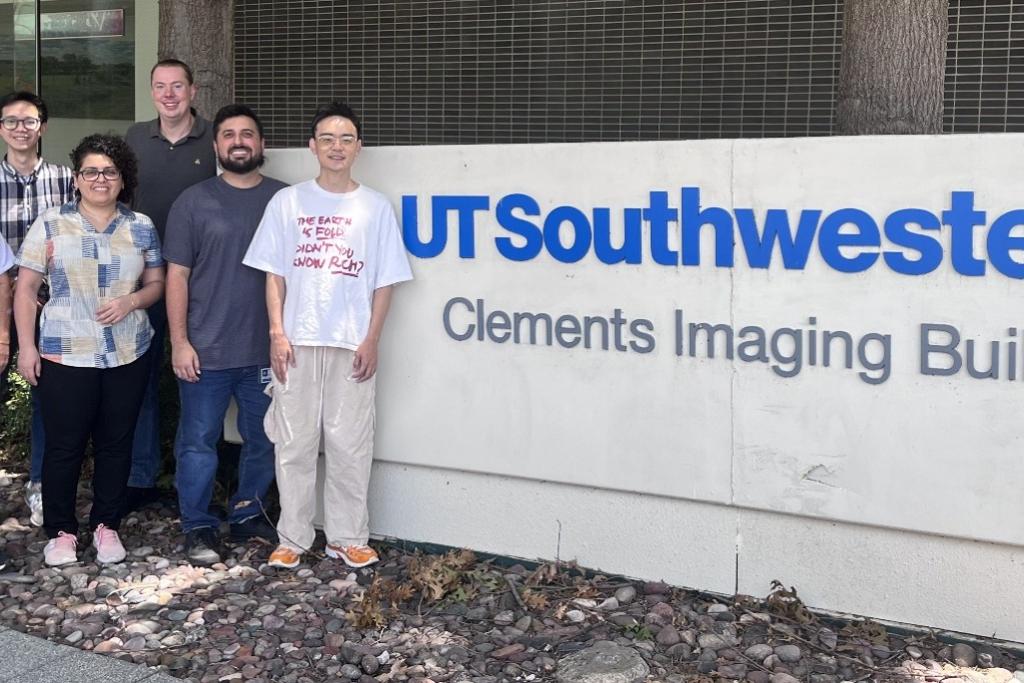
Current Lab Members
Sara Chirayil, Ph.D.
Senior Research Scientist, Lab Manager
Email
Dr. Chirayil is a Senior Research Scientist (part-time) in the Gloeggler lab. She earned her Ph.D. in Synthetic Organic Chemistry from University of Kerala, India. She did her post-doctoral work in Organometallics at University of Houston under the guidance of Prof. Randolph Thummel. After spending time away from work to raise her family, she joined UTSW in 2002 and has worked with Dr. Kevin Luebke , Prof. Dean Sherry and Prof. Zoltan Kovacs before she joined the Gloeggler lab in 2024. She retired in 2025 and was having so much fun in the lab that she decided to return to the lab as a part-time lab member. In her spare time she enjoys cooking, quilting, gardening, travelling and watching all types of sports.

Quy Son Luu, Ph.D.
Postdoctoral Researcher
Email
Dr. Luu received his B.S. in Pharmaceutical Chemistry from the Hanoi University of Science, Vietnam National University, in 2017. He later obtained his Ph.D. in Bionano Engineering from Hanyang University, South Korea, in 2024. Before joining Dr. Stefan Gloeggler’s laboratory in 2025, he was a postdoctoral researcher for 1.5 years at Hanyang University. His research interests include hyperpolarization MRS, pulse sequence programming, custom-built instruments, and organic and nanomaterial syntheses. He enjoys playing sports in his spare time.

Guoshu Xie, Ph.D.
Postdoctoral Researcher
Email
Dr. Xie earned his Ph.D. in organic chemistry from University of Massachusetts Boston. His current research focuses on the design of reaction-based deuterated molecular probes for ²H NMR, enabling multicolor, background-free readout of intracellular redox chemistry. He therefore develops isotope-encoded small molecules to monitor redox reactions and chemical transformations in living cells. Outside the lab, he enjoys traveling, exploring local cuisine, and playing video games.

Fatemeh Khashami, Ph.D.
Postdoctoral Researcher
Email
Dr. Fatemeh Khashami is a postdoctoral researcher at the AIRC at UTSW. Her research focuses on developing magnetic resonance methods to study metabolism in living systems, with an emphasis on deuterium magnetic resonance and quantitative NMR/MRI analysis. Her work connects physics, magnetic resonance, and biomedical imaging to develop noninvasive tools for detecting metabolic abnormalities in disease. Her broader interests include translational imaging, metabolic probe development, live-cell magnetic resonance, and the connection between quantum principles and magnetic resonance sensitivity.

Gabriel Rocha, B.S.
Graduate Student, Ph.D. Candidate
Email
Gabriel Rocha is a Biomedical Engineering Ph.D. student at UT Southwestern specializing in ParaHydrogen-Induced Polarized (PHIP) NMR. He earned his Bachelors in Physics from California State University, Long Beach and has an associate degree in Diagnostic Medical Sonography. He worked as a McNair Scholar under Dr. Jiyeong Gu on superconductivity/nanomagnetics and spent time as a Medical Sonographer before joining Dr. Stefan Glöggler’s lab in 2025. In his free time he enjoys Baseball (Go Dodgers), going to the Olive Garden, and standing behind you as you read this (turn around).
Lab News
- Congratulations to Fatemeh Khashami for receiving a Travel Award from the Gordon Research Conference on MR and Quantum Information Science!
- New paper published in JACS: Deuterated pH Probes Based on Ketoglutarate for Magnetic Resonance | Journal of the American Chemical Society
- Congratulations to Gabriel Rochia on becoming Ph.D. candidate
- Stefan Gloeggler, Ph.D., was elected as a Council Member of the International Society of Magnetic Resonance
Lab Fun
Publications
Khashami F, Alshamleh I, Chirayil S, Mei R, May LK, Fries LM, Huynh M, Xie G, Kovacs Z, Wansapura J, Deberardinis RJ, Glöggler S. "Deuterated pH Probes Based on Ketoglutarate for Magnetic Resonance." J. Am. Chem. Soc. 2026 May 6;148(17):17563-17568. DOI: 10.1021/jacs.5c22737 . Epub 2026 Apr 24. PMID: 42030450; PMCID: PMC13132030.
Mei R; Fries LM, Rodriguez GG, von Petersdorff-Campen C, May LK, Matz JF, Korchak S, Daher G, Glöggler S. "Hyperpolarization of Pyridine 15N Oxide Molecular Probes Enabled by Parahydrogen." Angew. Chem. Int. Ed. 2026. DOI: 10.1002/anie.202525716
Hune TLK, Aden A, Matz JF, Moll D, Kuprov, I, Glöggler S. "Hyperpolarization of Molecular Deuterium." Angew. Chem. Int. Ed. 2026 Mar 8; 65:e21985. DOI: 10.1002/anie.202521985
Matz JF, Kaltschee L, Mozzi SI, Rodriguez GG, Rcmer A, Mata RA, Kuprov I, Meyer F, Glöggler S. "Probing Hydrogen Activation in a Dimethyl Dihydride Complex by Symmetric Exchange with Parahydrogen." J. Am. Chem. Soc. Feb. 12; 148(7):7181-7188. DOI: 10.1021/jacs.5c18194
Khashami, F, Glöggler S. "Quantum entanglement control in two-spin-1/2 NMR systems through magnetic fields and temperature." Physical Chemistry Chemical Physics 2025 Jul 30, 27:16996-17007. DOI: 10.1039/d5cp02597d
Fries LM, Montrazi ET, Allouche-Arnon H, Opazo F, Bar-Shir A, Frydman L, , Glöggler S. "Deuterated Nanopolymers for Renal and Lymphatic Imaging via Quantitative Deuterium MRI." Nano Lett. 2025 Jan 22; 25(5):1758-1764. DOI: 10.1021/acs.nanolett.4c03036
Kaltschne L, Pravdivtsev AN, Gehl M, Huang G, Stoychev GL, Riplinger C, Keitel M, Neese F, Hövener J-B, Auer AA, Griesinger C, Shima S, Glöggler S. "Parahydrogen-enhanced magnetic resonance identification of intermediates in [Fe]-hydrogenase catalysis." Nat Catal. 2024 Dec; 7(12): 1417-1429. DOI: 10.1038/s41929-024-01262-w
Mei R, Fries LM, Hune TLK, Santi MD, Rodriguez GG, Sternkopf S, Glöggler S. "Hyperpolarization of 15N Pyridinium by Using Parahydrogen Enables Access to Reactive Oxygen Sensors and Pilot In Vivo Studies." Angew. Chem. Int. Ed. 2024 May 21; 136(33):e202403144. DOI: 10.1002/ange.202403144
Hune TLK, Mamone S, Schroeder H, Jagtap AP, Sternkopf S, Stevanato G, Korchak S, Fokken C, Müller C, Schmidt AB, Becker D, Glöggler S. "Metabolic Tumor Imaging with Rapidly Signal-Enhanced 1-13C-Pyruvate-d3." Chem. Phys. Chem. 2023 Jan 17; 24(2):e202200615. DOI: 10.1002/cphc.202200615
For a complete list of publications, please visit Stefan Glöggler - Google Scholar