The Sankary Neuroethics Lab at UT Southwestern explores the ethical dimensions of neuroscience and neurosurgical innovation.
Our work focuses on guiding the development of neural devices and brain-computer interfaces, ensuring responsible research and person-centered approaches. Using qualitative interviews, surveys, and consensus-building studies, we examine priorities and expectations of clinical research participants and ethical considerations in early-stage neurotechnology development.
Values: We are dedicated to advancing ethical practices in neuroscience and neurosurgery research. Our research informs the development of neural devices and therapies for the treatment of neurological disorders, addressing questions about participant expectations, return of results, and priorities for the development of novel neurotechnologies.
Meet the Principal Investigator
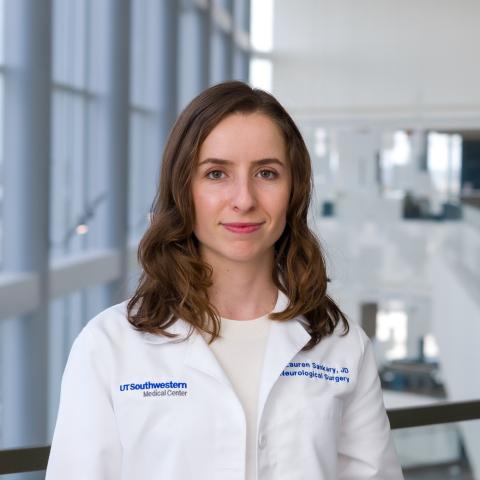
Lauren Sankary, J.D., M.A., HEC-C
Lauren Sankary, J.D., M.A., HEC-C is an Assistant Professor in the UT Southwestern Department of Neurological Surgery and the O'Donnell Brain Institute and a Clinical Ethicist at Clements University Hospital. Prof. Sankary conducts empirical investigations in clinical and translational research ethics with a strong track record of NIH and foundation funding. Her research applies legal, qualitative, and empirical bioethics research methods to investigate ethical issues in clinical research involving vulnerable patient populations, drawing upon her direct experience supporting informed consent as a clinical ethicist and research consent monitor for participants enrolling in innovative neurological research.
Prof. Sankary began her research career with NIH BRAIN Initiative-funded postdoctoral training examining ethical considerations related to explant of implanted neurotechnology and long-term implications of participation in biotechnology research (F32MH115419). She subsequently led two national survey studies investigating unanticipated challenges that arise in obtaining informed consent in research involving cognitively vulnerable patient populations (funded by NINDS 3UH3NS100543-03S1) and multiple stakeholder views on barriers to remote consent practices necessitated by the COVID-19 pandemic (funded by NIA 3P30AG062428-02S2). She also has experience leading community-based research to address mistrust contributing to underrepresentation of minoritized populations in brain related research, supported by a 2023 Cleveland Clinic Caregiver Catalyst Award. Prof. Sankary’s recent study funded by the NIH Office of the Director investigated ethically optimal approaches to capturing participant feedback and informing research participants in early exploratory neurotechnology research in humans (3R01AT011905-02S1). Her current research supported by an Alzheimer’s Association Research Grant (AARG-22-9744622) employs Delphi methods to build expert consensus regarding responsible approaches to sharing Alzheimer’s disease risk information with research participants. Through her research, Prof. Sankary aims to promote alignment between research and community priorities and address barriers to the ethical recruitment and return of value in neurological research.
Current Lab Members
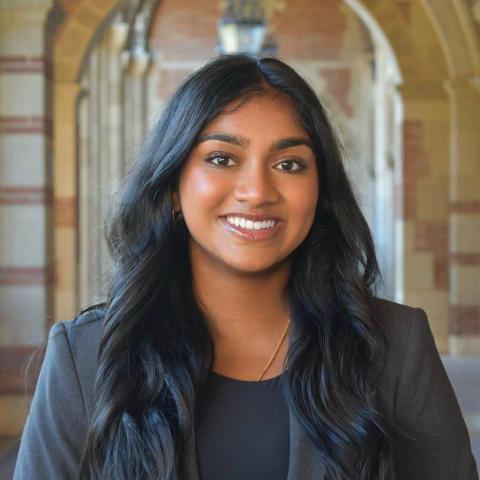
Harshikasai Kellampalli, B.S.
Harshikasai Kellampalli received her Bachelor of Science degree from the University of California, Los Angeles (UCLA), where she majored in Neuroscience and minored in Global Health. During her undergraduate training, she worked as a Clinical Research Assistant in the UCLA Psychology Department where her work focused on understanding brain–heart synchronization in patients with schizophrenia using electroencephalography (EEG), contributing to research at the intersection of psychophysiology, neural biomarkers, and clinical neuroscience. In addition to her human-subjects research experience, Harshikasai served as a Research Intern in the Lahiri Lab at Cedars-Sinai. There, she conducted animal research examining the neurobiological mechanisms of delirium in neuro–critical care populations, gaining exposure to translational neuroscience and neurocritical care research models.
Her research interests center on patient-centered and patient-driven care in neurology, with a particular focus on the neuroethics of shared decision-making in neurosurgery and pediatric neurology. She is also interested in clinical research methodology, stakeholder-engaged research, neurological health disparities, and the integration of ethical frameworks into complex neurological care and clinical trial design.
Collaborators (alphabetical order)
Participate in Neuroethics Research
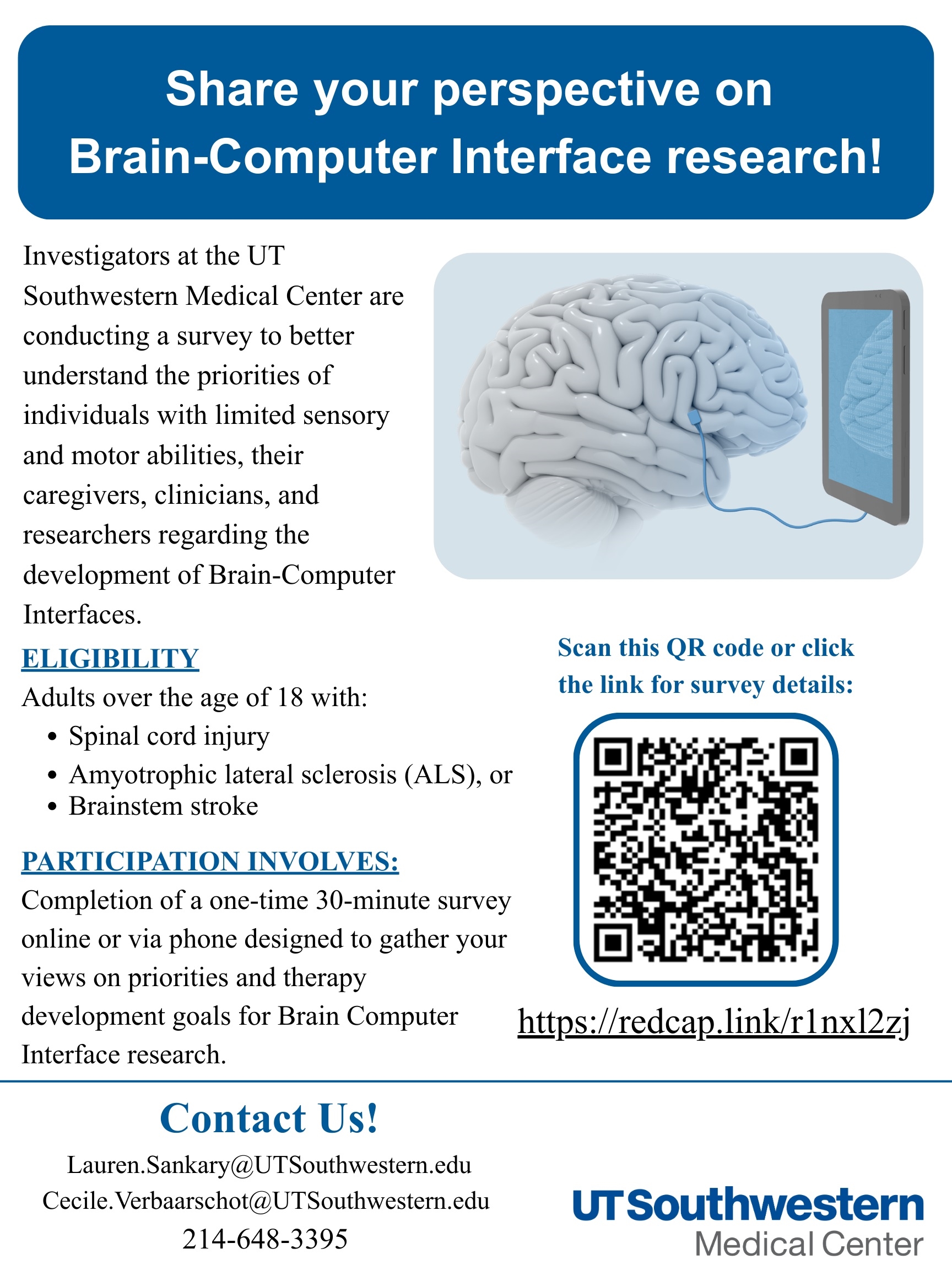
Research Opportunity: Aligning Therapy Development with Patient and Caregiver Priorities in Brain-Computer Interface Research
This is an opportunity to participate in a voluntary research study about understanding the goals of patients, caregivers, clinicians, and researchers with respect to research into new therapies. This study is being conducted by Lauren Sankary, an Assistant Professor in the Department of Neurological Surgery at UT Southwestern Medical Center. This study will be enrolling individuals diagnosed with various health conditions, their caregivers, and experts involved in the clinical care, research, or advocacy related to these conditions, including clinicians, researchers, representatives from funding bodies, and patient advocacy organizations. Participation includes completion of one online survey. Participating in this study is expected to take about 30 minutes (half an hour). If you would like additional information about this study, please contact us at: Email or 214-648-3279 (Monday – Friday, 9 am – 5 pm CST). Completion of the survey using the link below will indicate your agreement to participate after reading the information sheet describing the study in further detail.
Survey Link: https://redcap.link/AligningPrioritiesBCISurvey
Image
Publications
Featured Publications
Morley G, Sankary LR,
2026 Apr
Am J Bioeth
1-13
Rico V, Zelinsky M, Ford PJ, Leverenz J, Pillai JA, Miller JB, Martinez K, Lerner AJ, Tousi B, Apostolova LG, Arias JJ, Bolton CJ, Brewer AA, Bridgeman K, Burns JM, Butler T, Dierickx K, Erickson CM, Festari C, Fitri FI, Fowler NR, Gale SA, Gao C, Gallagher MD, Johnson KG, Morris JK, Porteri C, Qiu C, Rahman-Filipiak A, Rahemi Z, Richard E, Schaeverbeke J, Stern Y, Suver C, Trenaman S, Blasi MT, Vandenberghe R, Walter S, Williams K, Sankary LR,
2025 Sep
J Alzheimers Dis
13872877251379076
Sankary LR, Rico V, Zelinsky M, Webster HS, Lerner AJ, Martinez K, Ford PJ, Tousi B, Leverenz J,
2024 Aug
BMJ Open
8
14
e089242
Sankary LR, Zelinsky ME, Ford PJ, Blackstone EC, Fox RJ,
2023 Jan
Res Ethics
1
19
42-61
Morley G, Sankary LR, Horsburgh CC,
2022 Apr
Am J Bioeth
4
22
61-63
Sankary LR, Zelinsky M, Machado A, Rush T, White A, Ford PJ,
2022
AJOB Neurosci
4
13
215-226
Clarity on Palliative Neurosurgery: A Neuroethics Perspective.
Blackstone EC, Ford PJ, Sankary LR, 2021 Dec World Neurosurg 156 56-58Deep Brain Stimulation at End of Life: Clinical and Ethical Considerations.
Sankary LR, Ford PJ, Machado AG, Hoeksema LJ, Samala RV, Harris DJ, 2020 Apr J Palliat Med 4 23 582-585Integrating Agent-Regret with Frameworks for Mitigating Moral Distress.
Morley G, Sankary LR, 2025 Feb Am J Bioeth 2 25 36-38Attending to Trauma, Balancing Power, and Prioritizing Stakeholders in Ethics Consultation.
Ford PJ, Morley G, Sankary LR, 2025 J Clin Ethics 1 36 63-68Re-examining the relationship between moral distress and moral agency in nursing.
Morley G, Sankary LR, 2024 Jan Nurs Philos 1 25 e12419Nurturing moral community: A novel moral distress peer support navigator tool.
Morley G, Sankary LR, 2024 Aug Nurs Ethics 5 31 980-991Cerebellar deep brain stimulation for chronic post-stroke motor rehabilitation: a phase I trial.
Baker KB, Plow EB, Nagel S, Rosenfeldt AB, Gopalakrishnan R, Clark C, Wyant A, Schroedel M, Ozinga J, Davidson S, Hogue O, Floden D, Chen J, Ford PJ, Sankary L, Huang X, Cunningham DA, DiFilippo FP, Hu B, Jones SE, Bethoux F, Wolf SL, Chae J, Machado AG, 2023 Sep Nat Med 9 29 2366-2374Trusting the Ethics Consultant: Adopting a Trauma-Informed Approach to Ethics Consultation.
Sankary LR, Morley G, Ford PJ, 2023 Jan Am J Bioeth 1 23 101-103
Morley G, Sankary LR,
2023 Apr
Am J Bioeth
4
23
77-79
Petersen EA, Deer TR, Bojanic S, Sankary LR, Strand NH, Al Kaisy A, Huygen F, Sayed D, Steegers M, Verrills P, Schatman ME,
2023
J Pain Res
16
327-339
Webster HS, Sankary LR,
2023
AJOB Neurosci
4
14
375-377
When Obligations Conflict: Necessary Violations of Trauma Informed Care in Ethics Consultation?
Ford PJ, Morley G, Sankary LR, 2022 May Am J Bioeth 5 22 60-62Deconstructing Structural Injustices in the Clinic, Classroom, and Boardroom.
Riaz SH, Sankary LR, Brown TE, Morley G, 2022 Mar Am J Bioeth 3 22 29-32Telepsychology May Improve Treatment Adherence in Patients with Psychogenic Nonepileptic Seizures.
Tilahun BBS, Thompson NR, Bautista JF, Sankary LR, Stanton S, Punia V, 2022 Aug Telemed J E Health 8 28 1159-1165
Tilahun BBS, Thompson NR, Sankary LR, Laryea F, Trunick CM, Jehi LE,
2021 Oct
Epilepsy Behav
123
108277
Shapiro D, Sankary LR, Ford PJ,
2021 Nov
Am J Bioeth
11
21
35-37
Ramirez-Zamora A, Giordano J, Gunduz A, Alcantara J, Cagle JN, Cernera S, Difuntorum P, Eisinger RS, Gomez J, Long S, Parks B, Wong JK, Chiu S, Patel B, Grill WM, Walker HC, Little SJ, Gilron R, Tinkhauser G, Thevathasan W, Sinclair NC, Lozano AM, Foltynie T, Fasano A, Sheth SA, Scangos K, Sanger TD, Miller J, Brumback AC, Rajasethupathy P, McIntyre C, Schlachter L, Suthana N, Kubu C, Sankary LR, Herrera-Ferrá K, Goetz S, Cheeran B, Steinke GK, Hess C, Almeida L, Deeb W, Foote KD, Okun MS,
2020
Front Hum Neurosci
14
54
Sankary LR, Nallapan AM, Hogue O, Machado AG, Ford PJ,
2020
Front Hum Neurosci
14
581090
Treating Medically Unexplained Symptoms Empirically: Ethical Implications for Concurrent Diagnosis.
Sankary LR, Ford PJ, 2018 May Am J Bioeth 5 18 16-17
Sankary LR, Ford PJ,
2016 Nov
Am J Bioeth
11
16
53-54
Contact Us
Reach out to us via:
Phone: +1 214 648 8880
Email
Visiting Address:
Charles Cameron Sprague Clinical Science Building
5th floor
5161 Harry Hines Blvd
Dallas, TX, 75390