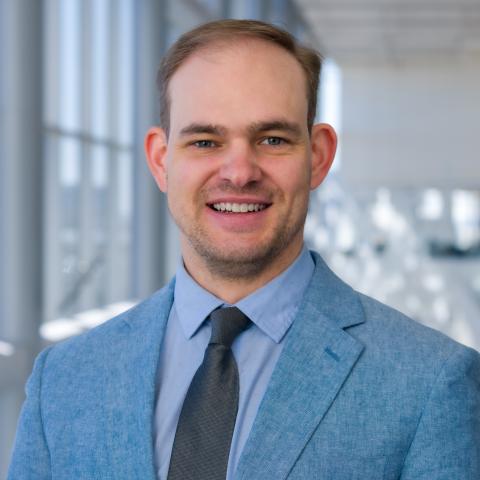
Luke Bartelt, Ph.D.
Principal Investigator
Luke Bartelt, Ph.D., is an Assistant Professor of Neurology within the Movement Disorders division at UT Southwestern Medical Center and an O’Donnell Brain Institute Investigator. He earned his Ph.D. at Duke University in Genetics and Genomics in 2024, working under Dr. Albert La Spada and Dr. Craig Lowe, where he developed a method to isolate Purkinje cell nuclei from the cerebellum. With this method, Luke used single-nucleus RNA-sequencing technologies to discover that a breakdown of the two major subtypes of Purkinje cells (marked by zebrin-II) is a shared mechanism of polyglutamine spinocerebellar ataxias. The Bartelt Lab is continuing to innovate on methodologies for single-cell and spatial sequencing technologies to better understand the epigenetic basis of cerebellar neurodegeration, engineer improved gene therapy vectors, and accelerate the development of medical imaging modalities in the cerebellum.

Iva Lazarova
Research Assistant II
Iva completed her undergrad at CSU East Bay in Hayward, CA, where she graduated with a Bachelor of Science in Cell and Molecular Biology. She later continued post baccalaureate training in biotechnology, and worked in a mix of academic and industrial laboratories where she’s held a broad variety of research interests. This includes immunological research in Tritonia tetraquetra (a marine slug model for the neurophysiological basis of behavior), cell derived small molecule and antibody therapeutics, and cellular mechanisms underlying neuroinflammatory diseases. Currently she is supporting research in the Bartelt Lab developing in-vivo functional genomics assays and studying cerebellar maturation.
When not in the lab she prefers working on a fiber art project, reading with a mug of tea (and usually one of her cats unhelpfully laying on the book), baking, or fossil hunting/exploring nature parks and museums.
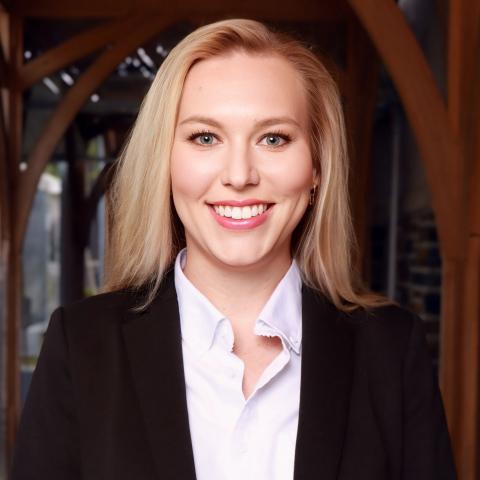
Madison Strain, PhD.
Postdoctoral Researcher
Madison earned her Ph.D. in Genetics & Genomics from Duke University, where she studied the genetic architecture of neural tube defects. Her doctoral research involved developing reproducible computational workflows and applying approaches such as genome-wide association studies, rare-variant analyses, and polygenic risk score construction. She is broadly interested in using multi-omic technologies to better understand disease biology and translate complex data into meaningful biological insights.
Currently, Madison supports research in the Bartelt Lab using single-cell genomic approaches, including single-nucleus RNA sequencing and ATAC sequencing, to investigate neurodegenerative disease mechanisms and characterize the molecular diversity of the cerebellum.
Most notably, Madison is a proud alumna of The Texas A&M University, where she received a B.S. in Genetics and Statistics.

You!
The Bartelt Lab is currently hiring wet/dry lab technicians, graduate students, and postdocs. If you are interested in joining a new team, use cutting-edge genomic technologies, and push forward research for cerebellar neurodegeneration – reach out to Dr. Bartelt describing what you could bring to the Bartelt Lab.