Spinocerebellar ataxia type 7 (SCA7) is a genetic neurodegenerative disease caused by a CAG-trinucleotide expansion in the Ataxin-7 gene. SCA7 is characterized by cerebellar and retinal degeneration, leading to progressive decline in motor control and vision in patients. As a member of the STAGA transcriptional co-activator complex, CAG expansions in Atxn7 leads to widespread transcriptional dysregulation in the cerebellum and eventual death of cerebellar Purkinje cells. We recently discovered that a breakdown of gene networks specifying Purkinje cell subtypes, marked by the alternating expression of zebrin-II (Aldoc), is one of the earliest and strongest transcriptional signals in the SCA7 cerebellum.
Using single-cell and spatial genomic technologies, we are currently investigating the epigenetic mechanisms underlying the breakdown of Purkinje subtypes, and their contribution to motor phenotypes in SCA7.
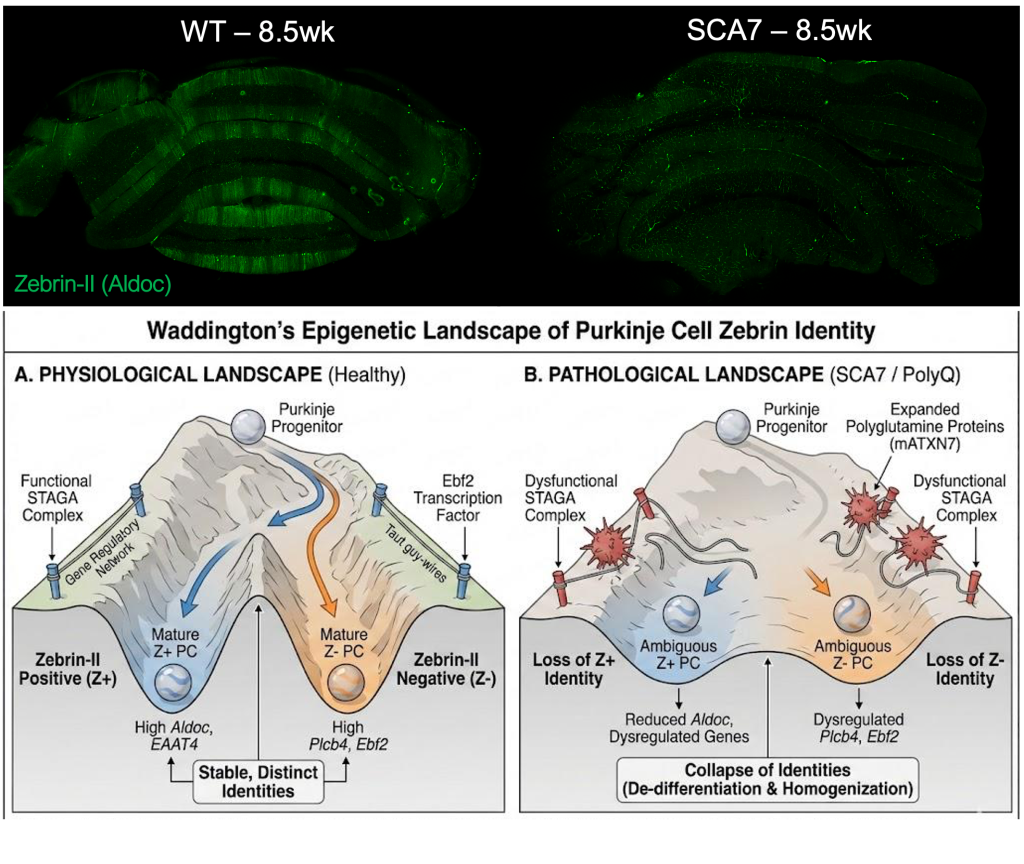 Figure 1: Expanded poly proteins (e.g., mATXN7) disrupt the STAGA transcription complex and epigenetic landscape, leading to the erosion of barriers and loss of Purkinje cell subtypes.
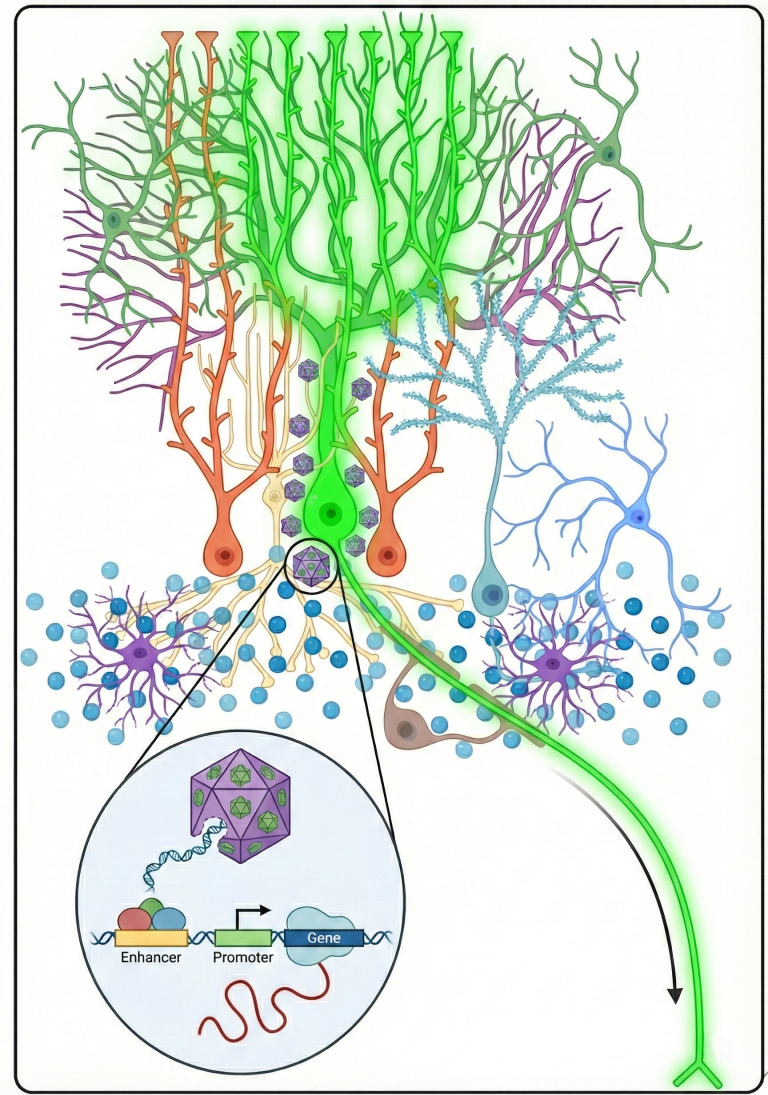
 Cell-type-specific problems require cell-type-specific solutions. Using in-vivo functional genomic assays with single-cell and spatial transcriptomic readouts, we are working to generate cell-type-specific AAV vectors for gene therapy and basic science applications.