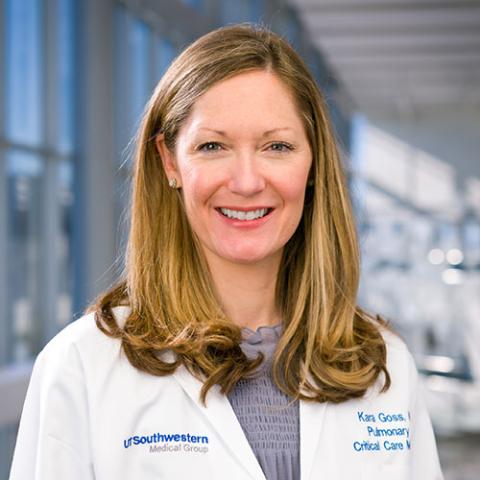
Kara Goss, M.D.
Dr. Goss is trained in both internal medicine and pediatrics and has a long-standing interest in late outcomes after preterm birth. During her training in pulmonary and critical care medicine, Dr. Goss cared for a patient thought to have severe pulmonary hypertension (high blood pressures in the lungs). She discovered that this patient had been born 2 months premature in 1958. The patient asked if her prematurity could have caused her pulmonary hypertension. At the time, the answer was unknown, but that single question launched a research career into the long-term effects of preterm birth.
The Goss lab collaborates with a multidisciplinary group of researchers to study the heart and lungs long after preterm birth. This includes in-person studies in adolescents and adults born moderately to extremely preterm (generally less than 32 weeks gestation). The lab also uses animal studies to understand the direct effects of postnatal hyperoxia on the developing heart and lungs.
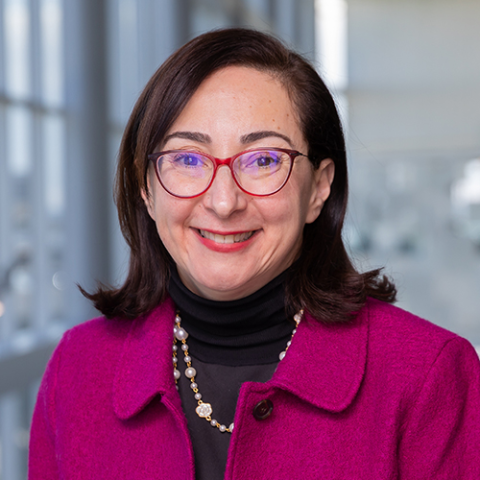
Lina Chalak, M.D., M.S.C.S.
Lina Chalak, M.D., M.S.C.S., Chief of Neonatology is a Professor in the Department of Pediatrics and the Department of Psychiatry at UT Southwestern Medical Center. A physician-scientist, she specializes in fetal-neonatal neurology and developmental neuroscience (Chalak Lab | UT Southwestern, Dallas, Texas).
Dr. Chalak’s primary focus is to improve neonatal neurologic care and outcomes. Her synergistic clinical and research programs integrate cutting-edge research and team science clinical care focused on the neonatal brain. Her research trajectory has evolved from bridging translational studies in a piglet model of asphyxia to elucidating mechanisms of neonatal brain injury to conducting clinical trials aimed at optimizing neuroprotection and developing novel physiological biomarkers of brain health. Her interdisciplinary collaborations include nationally funded networks, including the National Institute of Neurological Disorders and Stroke (NINDS) and the Neonatal Research Network (NRN) and PCORI. In parallel with her sustained National Institutes of Health (NIH)-funded research program, Dr. Chalak created UT Southwestern’s clinical Neurological Neonatal Intensive Care Unit (NeuroNICU) program in 2018 and the Fetal and Neonatal Neurology Fellowship Training Program in 2019.
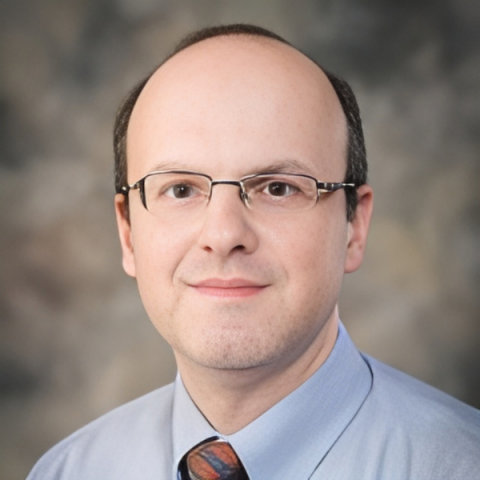
Dimitrios Angelis
Dr. Dimitrios Angelis is an Associate Professor of Pediatrics in the Division of Neonatal–Perinatal Medicine at the University of Texas Southwestern Medical Center. His research focuses on neonatal brain injury, including hypoxia–ischemia, prevention of intraventricular hemorrhage in extremely preterm infants, vascular malformations such as vein of Galen malformation, as well as the effects of zinc on the developing brain. Since 2025, he oversees the management and use of the Parkland NICU Database, leading data analysis and annual reporting to the Division of Neonatal–Perinatal Medicine with the goal of identifying opportunities to improve neonatal care and optimize outcomes
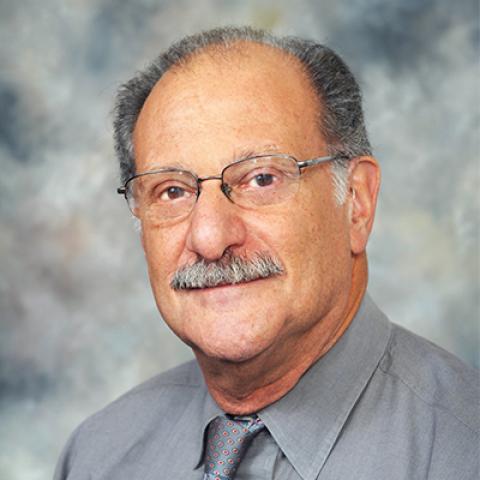
Charles Rosenfeld, M.D.
Dr. Rosenfeld is a neonatologist and served as the original Primary Investigator (PI) for the Parkland NICU Database. He envisioned a comprehensive database that could be used to understand trends in neonatal care, improve short-term outcomes in the neonatal ICU, and one day be used to study long-term effects of extreme prematurity and specific neonatal practices. In addition to managing the Parkland NICU Database, Dr. Rosenfeld established a perinatal biology laboratory for the study of cardiovascular changes in pregnancy including maternal uteroplacental and fetal umbilical blood flow.
Realizing his own dream of utilizing the Parkland NICU Database to study long-term outcomes of prematurity, Dr. Rosenfeld recently completed a study of 10-year-olds born preterm at Parkland Hospital. These children were invited back to the Thrive (Low Birth Weight) Clinic at Children’s Medical Center for a study on the impact of prematurity on blood pressure and kidney function.

Luc Brion, M.D.
Dr. Brion’s research focuses on improving nutrition and growth in very preterm and low-birth-weight infants as well as using evidence-based medicine to improve neonatal care. He is the current primary investigator overseeing management and use of the Parkland NICU Database. In this role, he presents summary data from database each year to UT Southwestern and Parkland Hospital Neonatologists and medical providers to demonstrate areas of strength as well as areas where neonatal care can continue to improve.

Mambarambath Jaleel, M.D.
Mambarambath Jaleel, M.D., is an Associate Professor in the Department of Pediatrics at UT Southwestern Medical Center. He is board certified in Pediatrics and Neonatal-Perinatal Medicine.
Dr. Jaleel completed a fellowship in neonatology at The Canberra Hospital and University of Sydney in Australia and become a Member of the Royal College of Pediatrics and Child Health of the United Kingdom in London, England, he moved to the United States. He completed an additional fellowship in Neonatal-Perinatal Medicine at Women & Infants Hospital and Warren Alpert Medical School of Brown University.
Dr. Jaleel has served as the Medical Director for Parkland Hospital’s Dallas NICU from 2009 to 2025. In this role, he has created a unique neonatal quality program and a culture of quality improvement with a diverse platform of ongoing structured quality improvement projects using statistical process control (SPC) methodology. These projects have been presented at various quality improvement forums, won honors and accolades for the institution, and led to multiple publications.