Wei Lab Research
Targeting therapy-resistant cells in RMS tumors
Rhabdomyosarcoma (RMS) is the most common soft tissue sarcoma in children and young adults, affecting hundreds of families in the U.S. each year. Current treatments - chemotherapy, surgery, and radiation - have not significantly improved survival in over 30 years. For patients with refractory or relapsed diseases, survival drops to ~20%. To make progress, we must understand why these cancers resist treatment.
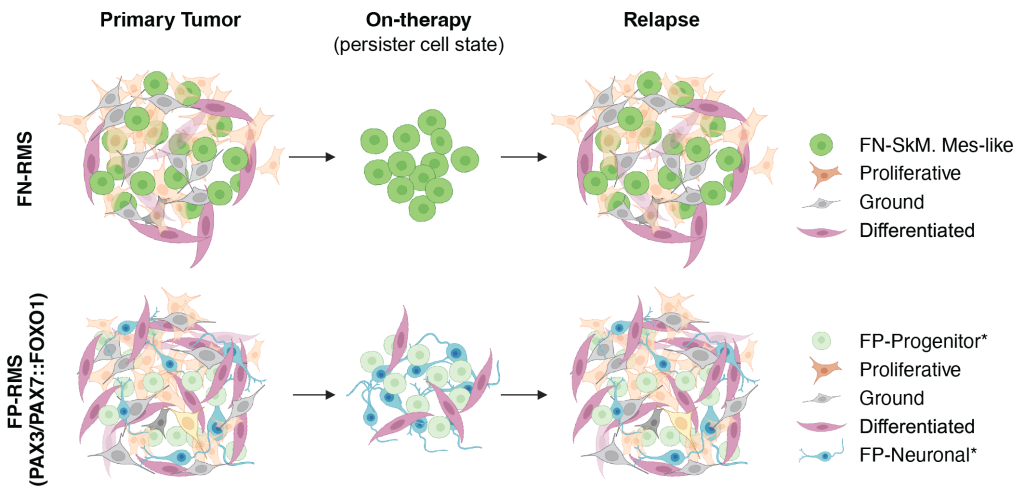
Using single-cell RNA sequencing of tumors from patients with rhabdomyosarcoma, we identified a rare subpopulation of “persister cells", in fusion-negative (FN-, also known as embryonal) and fusion-positive (FP-, majorly alveolar) RMS. These cells survive chemotherapy and later “wake up”, transitioning into fast-dividing tumor cells that cause relapse. However, how these persister cells endure treatment and re-enter growth remains unclear.
We propose to track these persister cells over time - before, during, and after therapy - using advanced tools such as barcode tracing and single-cell multi-omics. With unique barcodes, we can follow the fate of individual cells while profiling their gene activity and epigenetic state. Computational modeling will reveal the regulatory network that allows persister cells to 1) tolerate therapy and 2) re-initiate tumor growth.
Importantly, we have found that persister cells emerge regardless of the tumor’s genetic background, suggesting that new therapies must directly target this population. By uncovering the molecular “survival strategies” of persister cells, our work aims to develop the first therapies that stop these dangerous cells before treatment begins - bringing new hope for children with rhabdomyosarcoma.